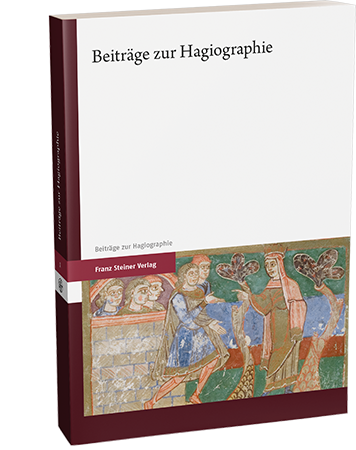
Beitraege zur Hagiographie
Ideas about holiness and sacredness, people venerated as saints, artefacts, and stories about things that are holy have gone far beyond the religious realm in determining the social, political, economic and cultural life in the European societies of the past.
The series Beitraege zur Hagiographie is devoted to the meaning-generating function of writing about the sacred and the saints in historical epochs and in the current debate on religion. It offers representatives of historical and literary studies, theology and church history, religious studies and sociology a forum for presenting and discussing their theories of the sacred, their methods of researching the sacred, and hagiographical ways of writing, as well as their empirical analyses of material objects and hagiographical texts.
> series overview | > the series on our elibrary
Edited by
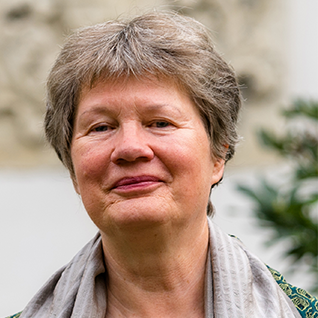
Prof. Dr. Hedwig Röckelein
(executive editor)
Universität GöttingenSeminar für Mittlere und Neuere Geschichte
Heinrich-Düker-Weg 14
37073 Göttingen
DEUTSCHLAND sekretariat.roeckelein@uni-goettingen.de
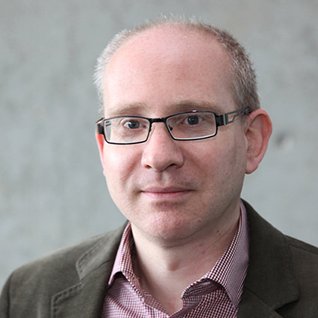
Prof. Dr. Andreas Bihrer
Universität KielHistorisches Seminar
Olshausenstr. 40
24118 Kiel
DEUTSCHLAND abihrer@email.uni-kiel.de

Prof. Dr. Klaus Herbers
Universität Erlangen-NürnbergInstitut für Geschichte
Lehrstuhl für Mittelalterliche Geschichte und Historische Hilfswissenschaften
Kochstr. 4/9
91054 Erlangen
DEUTSCHLAND klaus.herbers@fau.de

Prof. Dr. Julia Weitbrecht
Universität zu KölnInstitut für deutsche Sprache/Literatur I
Ältere Sprache und Literatur (Mediävistik)
Albertus-Magnus-Platz
50923 Köln
DEUTSCHLAND j.weitbrecht@uni-koeln.de
Beiträge zur Hagiographie
General information
ISSN 1439-6491 (print)
ISSN 2699-352X (online)
Founded: 2000
Size: 17 x 24 cm
Languages: English, French, German, Italian
Validation: peer review
Publishing information
Please send manuscript submissions to our acquisition managers or to the editors of the series. Submissions must be original texts (no translations) which must not be previously published. During the review process, manuscripts may not be submitted elsewhere. Monographs must be complete and fully finished. For multi-authored volumes contact us as early as possible with details of the planned contributions. In initial submissions, our publication guidelines or citation rules do not have to be strictly followed.
All submissions are subjected to peer review. The review process can result in acceptance, the recommendation of revisions or rejection of the project. You will be informed of the decision by email. We attempt to reach a decision within 3 months of the submission of the manuscript.
In our area for authors you will find all the general information you need about structuring your article, formatting your text, working with images and tables and so on. Here we have linked the most important pages for you:
- Technical requirements
- Contribution guidelines
- Text body
- Figures and images
- Tables
- Lists and bibliography
- Use of AI
Additional editorial information and citation guidelines
General notes
- Source citations are set in italics (without quotation marks) – particularly when they refer to terms cited in the text. All other quotations are enclosed in double quotation marks (“...”).
- Single quotation marks (,...‘) are used only for titles of works within the context, for quotations within quotations, or for indirect speech.
- Additions to quotations by the author, even if they are omissions, are placed in square brackets: [...].
- Where the author has emphasised text within quotations, please add: [Emphasis added by the author].
- Avoid highlighting words in the text where possible; if necessary, use italics (not bold).
- Dates should be formatted as follows: 1 March 2014.
- Please use small capitals for words that appear in CAPITAL LETTERS in these guidelines.
Abbreviated references in footnotes
- Abbreviated references in footnotes include the author’s surname in small capitals, along with an abbreviated title and the page numbers.
RÖCKELEIN, Reliquientranslationen, p. 31. - Page and column references are indicated by ‘p.’ or ‘col.’. If reference is made to the following page, the abbreviation ‘f.’ is used. It is not separated from the page number by a space, e.g. ‘p. 65f.’. The use of ‘ff.’ is not permitted.
- To highlight specific pages, the abbreviation ‘spec.’ may be used, e.g. ‘spec. pp. 2–6’ .
- Only when the same title is repeated immediately afterwards: ibid.
- Multiple citations within a single work are separated by commas
KOSCHORKE, Truth and Invention, pp. 98, 123f., 198, 202, 212. - Several titles in succession are separated by semicolons.
RÖCKELEIN, Reliquientranslationen, p. 22; CZOCK, Gottes Haus, pp. 151–170; KLANICZAY, Heiligkeit, pp. 202f. - If a footnote is to be referred to in a short title, ‘Note’ is inserted in brackets. The same procedure applies to illustrations.
RÖCKELEIN, The Transfer of Relics, pp. 4ff. (Note 8); KLANICZAY, Holiness, p. 72 (Fig. 4).
Bibliography
- Authors’ and editors’ first names are written out in full.
- When citing multiple authors, their names are separated by a slash. However, a maximum of three authors or places should be listed. The remainder should be abbreviated as ‘et al.’.
- The edition is indicated as a superscript number before the year, e.g. ‘Ostfildern ²1990’. If it is the first edition, this is not noted separately.
- References to websites are supplemented by the following addition: [accessed on DD.MM.YYYY]
Edition and Translation
- Title. Subtitle, ed. [and trans.] by SURNAME, First name (series), Place Year, pages, if applicable.
The Early Lives of St Dunstan, ed. by WINTERBOTTOM, Michael / LAPIDGE, Michael (Oxford Medieval Texts), Oxford et al. 2012.
The Chronicle of Petershausen Abbey, ed. and trans. by Otto FEGER (Swabian Chronicles of the Staufer Period 3), Lindau/Constance 1956.
Monograph
- SURNAME, First name, Title. Subtitle, Place [Edition] Year.
KOSCHORKE, Albrecht, Truth and Fiction. Fundamentals of a General Theory of Narrative, Frankfurt am Main, 2nd ed., 2012.
Edited volume
- Title. Subtitle, ed. by SURNAME, First name / SURNAME, First name, Place [Edition] Year.
Women’s Mysticism in the Middle Ages, ed. by DINZELBACHER, Peter / BAUER, Dieter R., Ostfildern ²1990.
Contribution in an edited volume
- SURNAME, first name, title. Subtitle, in: Journal title, issue (volume), pages.
STIEVERMANN, Dieter, ‘Imperial Legal and Political Framework Conditions for the Denominations in the Early Modern Period’, in: Rottenburg Yearbook for Church History 13 (1994), pp. 11–24.
Encyclopaedia entry
- SURNAME, First name, article ‘Article title’, in: Encyclopaedia title, volume (year), column number.
CHITTOLINI, Giorgio, article ‘Podestà’, in: Encyclopaedia of the Middle Ages 7 (1995), cols. 30–32.
Internet resource
- Name, Title, Date. URL [accessed on DD.MM.YYYY].
Schlotheuber, Eva, Open letter regarding the cancellation of the radio programme ‘ZeitZeichen’ on NDR Info, 15 June 2020. https://www.historikerverband.de//mitteilungen/mitteilungs-details/article/offener-brief-zur-einstellung-der-radiosendung-zeitzeichen-auf-ndr-info.html [accessed on 15 May 2021].
Please see our information on copyright, self-archiving rules and guidelines for the use of PDF reprints here:
For our publication ethics statement have a look here:
Subscribe
Do you wish to order the series on a continuing basis? Please get in contact with us and write to us here:
Latest books
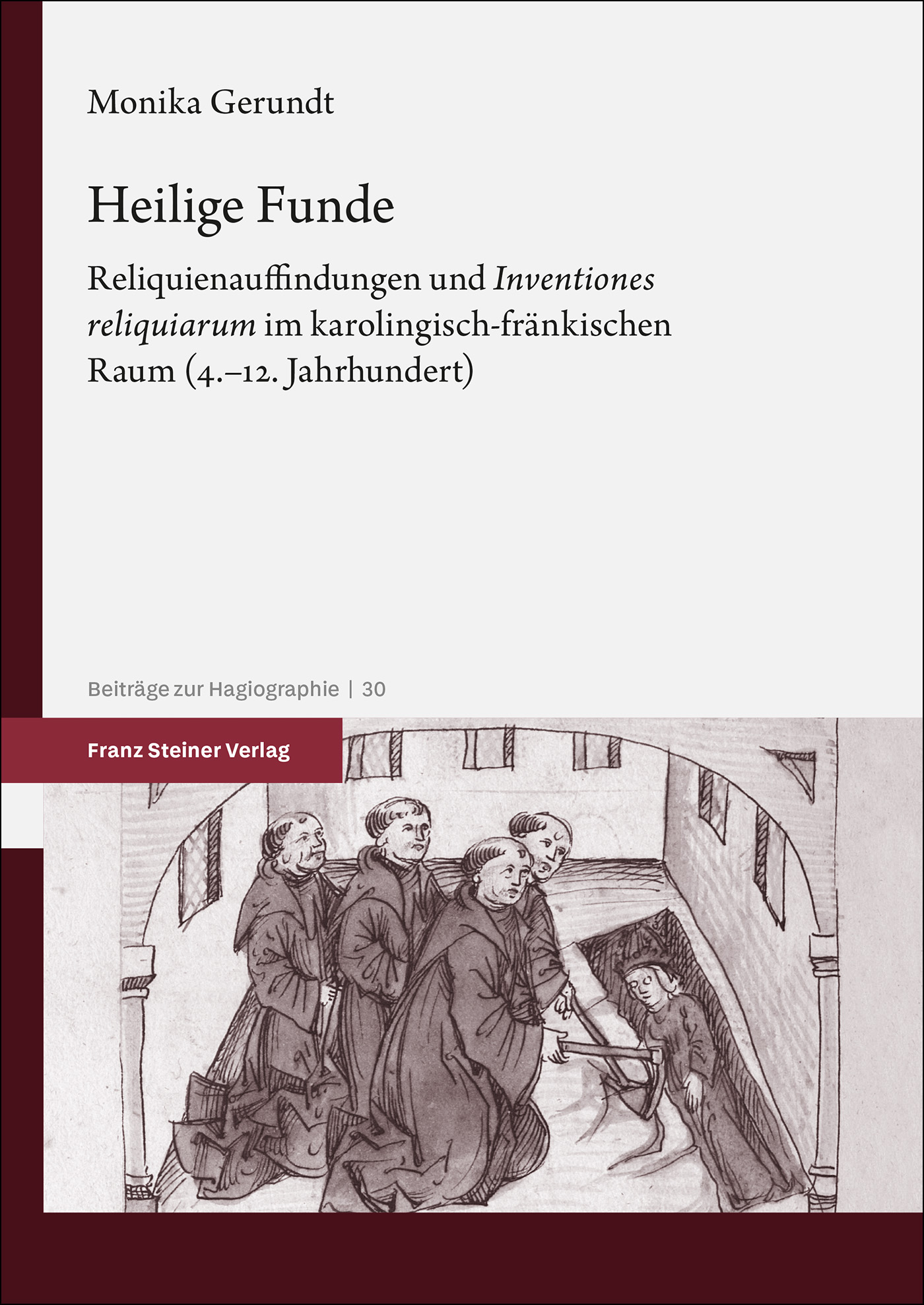
-
€76.00*
-
€76.00*
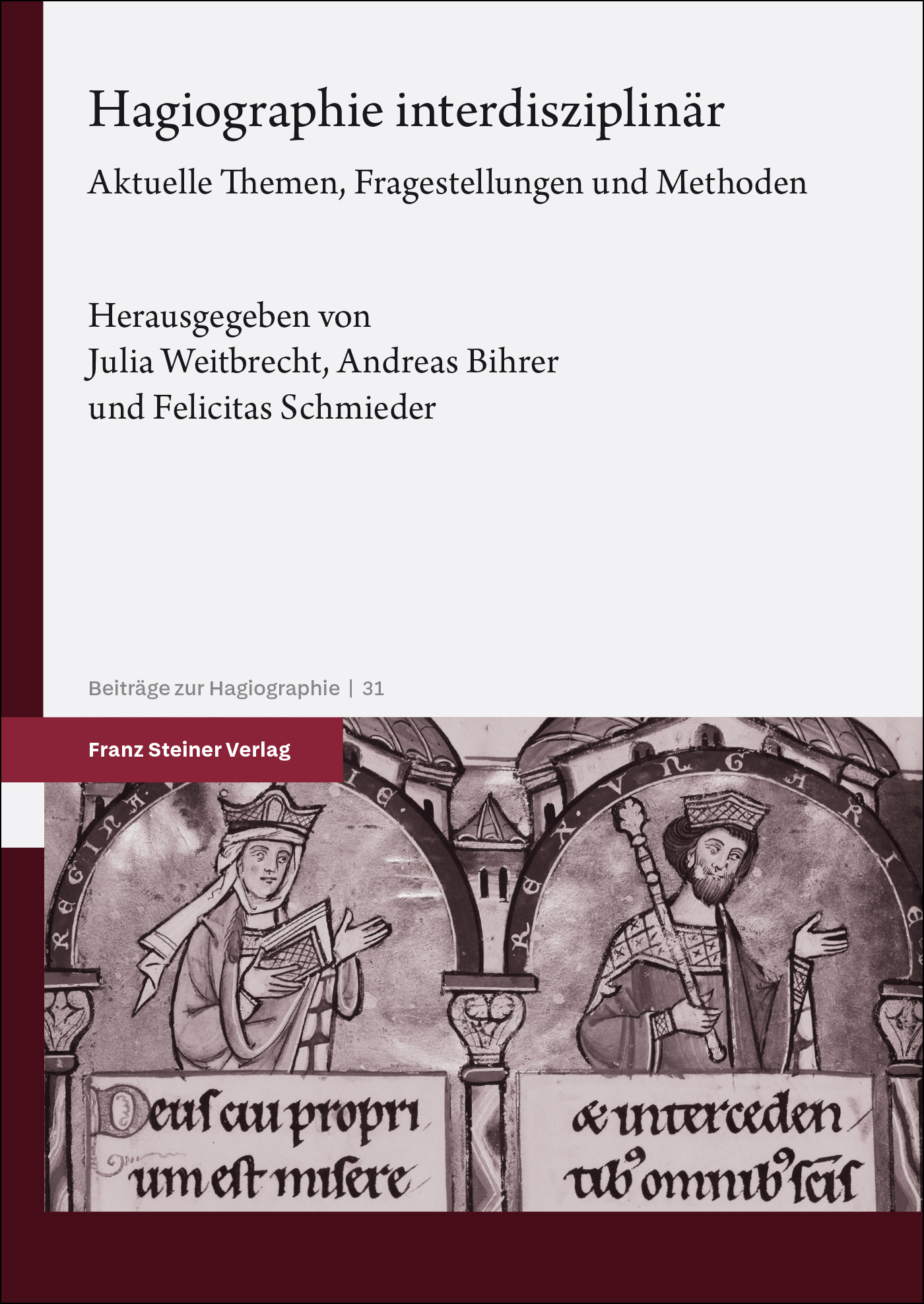
-
€58.00*
-
€58.00*
-
€54.00*
-
€54.00*
-
€50.00*
-
€50.00*
-
€62.00*
-
€62.00*