Gender, Work, and Service in Late Medieval and Early Modern Europe
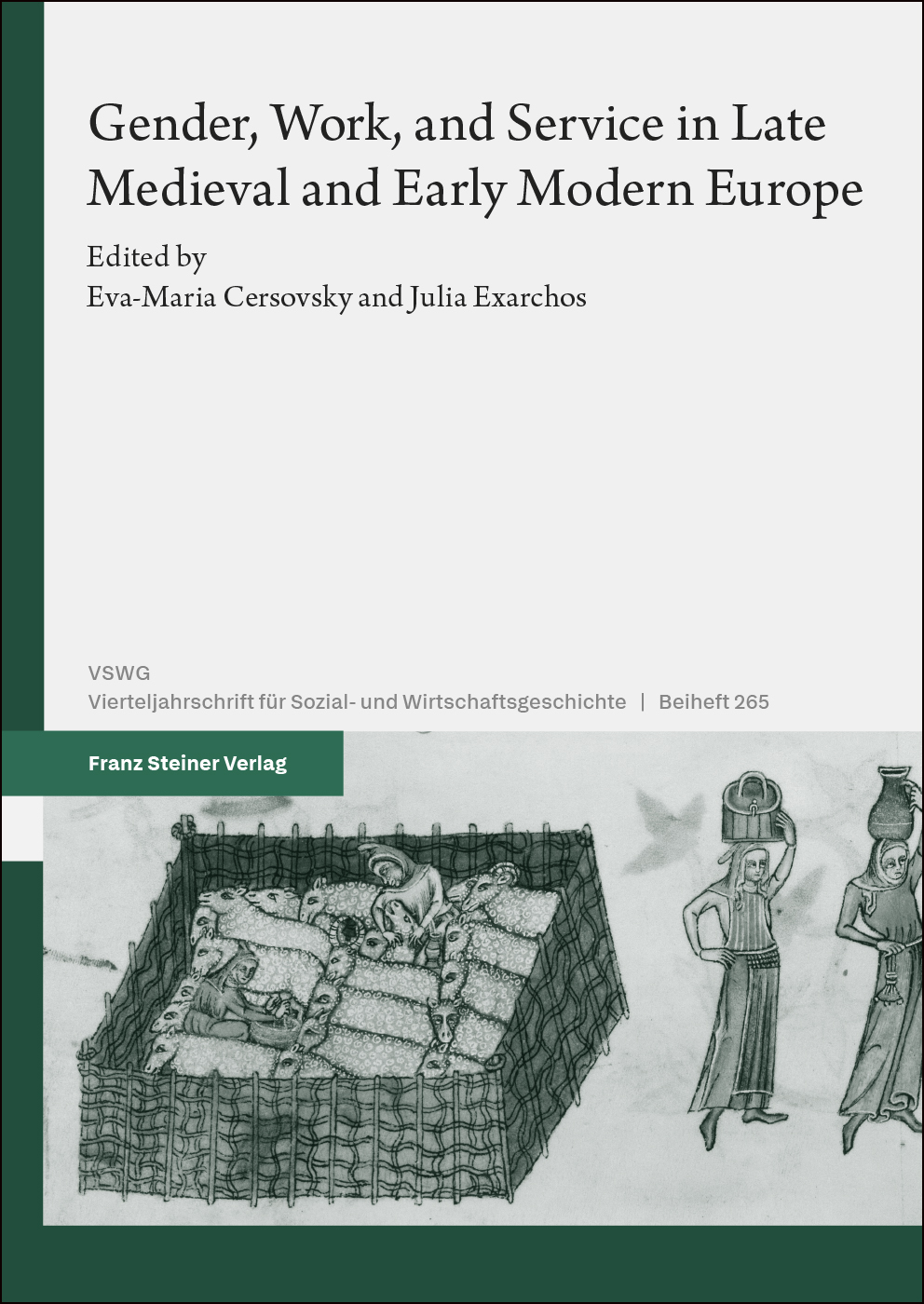
By focusing on service as an important socio-historical reality of labour, this volume presents new research on the complex relations between gender and work in Europe between c. 1300 and 1600. Service was a pervasive notion in the organization of both work and human relations that existed in various forms and spaces: The contributions analyse domestic service in artisan, merchant, and noble households, service work on fields and within workshops, brothels, religious communities and hospitals, as well as services related to communication, war, and the mediation of economic networks in cities.
Relationships between different masters and servants or between individuals and communities form the core of each contribution – in Latin-Christian communities of Western Europe, in Orthodox Serbia, and among Jews in late medieval Ashkenaz. These relationships combined mutual obligations and hierarchies, existing along a continuum of dependency and autonomy which included varying degrees of (in)equality, coercion, and (un)freedom. By adopting intersectional perspectives, the manifold, often ambivalent ways in which work and service were experienced, negotiated, and gendered in premodern Europe are uncovered.
| Reihe | Vierteljahrschrift für Sozial- und Wirtschaftsgeschichte – Beihefte |
|---|---|
| Band | 265 |
| ISBN | 978-3-515-14246-5 |
| Medientyp | Buch - Gebunden |
| Auflage | 1. |
| Copyrightjahr | 2026 |
| Verlag | Franz Steiner Verlag GmbH |
| Umfang | 424 Seiten |
| Abbildungen | 14 farb. Abb., 4 s/w Tab. |
| Format | 17,0 x 24,0 cm |
| Sprache | Englisch |